
Reviewed · ZURICH OLD TOWN WALKS
Zurich a journey through time, history and the Reformation
Zurich changes fast when you see it as a story. This tour links Roman-and-Celtic Zurich to the Reformation in the streets, using real places, sharp details, and entertaining explanations. I like that it is not just about dates; it is about how sermons, debates, and power played out right where you’re standing. I also like the church stop: a guided visit to the Fraumünster, including the famous Chagall windows, adds a very human layer to the religious history.
One consideration: it is not designed for wheelchair users, and there is no food or drink included, so plan to grab a snack before or after.
In This Review
- Key things you’ll notice on this Zurich time-travel walk
- How Zurich became a Reformation hot spot (and why you’ll care)
- Starting at Heiristeg: the easiest way to begin without stress
- Zurich’s “layer cake”: Celts, Romans, and the city’s memory
- Lindenhof: where Romans guarded and you get a view that explains the city
- Archäologisches Fenster: the “window” into what was underfoot
- Roman Heater System: small detail, big meaning
- Rathausbrücke: a bridge stop that keeps you moving
- The Reformation in real places, not just a lecture
- Churches on the route: Fraumünster, St. Peter, Wasserkirche, and Grossmünster
- Church of St. Peter: a stop that sets the religious stage
- Fraumünster: the main indoor moment (and why the Chagall windows matter)
- Wasserkirche and Grossmünster: two iconic silhouettes with a purpose
- Roman power meets reform power: why Lindenhof and the churches work together
- Legends, anecdotes, and how stories make the history stick
- Included value: what your money covers (and what it does not)
- What’s included
- What’s not included
- Pacing and comfort: what to expect from the timing
- Who this tour is best for
- Should you book Zurich a journey through time, history and the Reformation?
- FAQ
- How long is the tour?
- What’s the meeting point for the tour?
- Is the Fraumünster church admission included?
- Which languages are offered for the live guide?
- Is the Grossmünster tower included?
- Is food or drinks included?
- Is the tour suitable for wheelchair users?
Key things you’ll notice on this Zurich time-travel walk
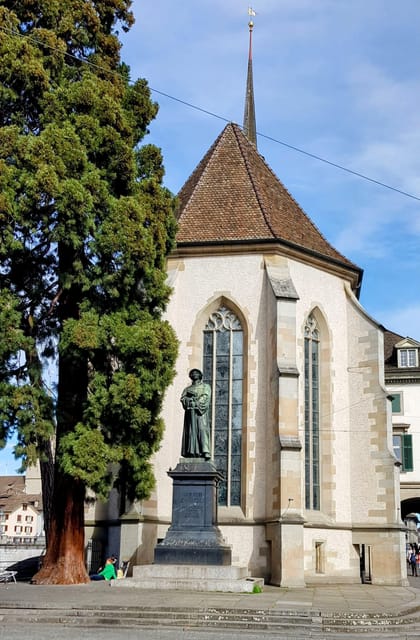
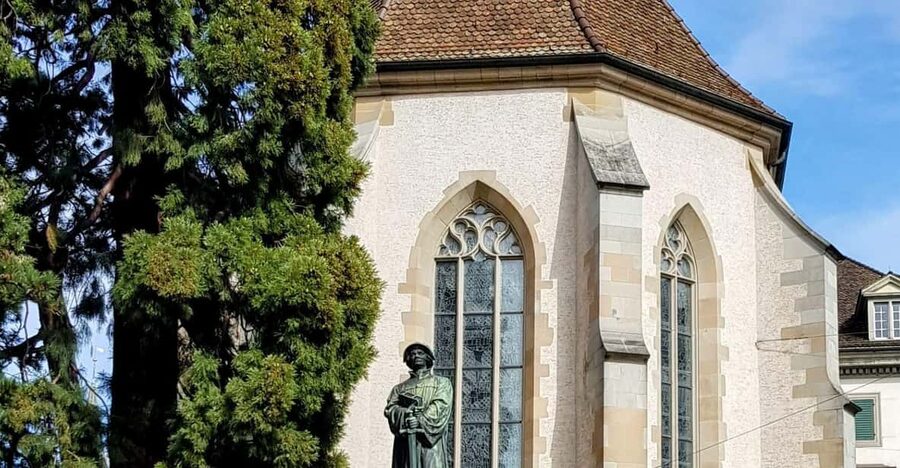
- Zwingli’s Zurich, on the actual ground: you follow the reformer’s footsteps through the Old Town streets and key sites.
- Two ancient time periods at once: Celtic/Roman origins show up at Lindenhof and the archaeology stops.
- Fraumünster first, art as history second: you’ll visit the church and get the social story behind the windows.
- Views that connect eras: the stop at Lindenhof isn’t only scenic; it’s where Roman presence meets a later city turning point.
- Legends plus arguments: you get Zurich’s stories and anecdotes alongside the serious ideas of the Reformation.
- A private group format: the guide pacing stays focused on what your group wants to understand.
Keep wandering the lanes of the Old Town
- Zurich: City Tour, Cruise, and Lindt Home of Chocolate Visit★ 4.5 · 4,624 reviews
- Zurich: City Highlights Tour by Bus, Cable Car, and Ferry★ 4.4 · 2,366 reviews
- Best of Zurich Tour with Felsenegg Cable Car and Ferry Ride★ 4.0 · 1,229 reviews
- Zurich: City Bus Tour with Audio Guide and Lake Cruise★ 4.3 · 1,195 reviews
How Zurich became a Reformation hot spot (and why you’ll care)
Zurich looks like the kind of city that would politely keep its history behind museums. This tour flips that idea. You walk through the kind of streets where belief could spread fast, where public debate mattered, and where a reform movement gained momentum because people were willing to challenge long-standing traditions.
The focus is Huldrych Zwingli, the reformer who helped turn Zurich into a center for radical change over 500 years ago. The tour is built to answer a practical question you’ll keep hearing in your head: why did Zurich, of all places, become such fertile ground for reform?
And you don’t just hear that in theory. You see the setting. That’s what makes this feel like a true time travel experience instead of another old-town checklist.
Starting at Heiristeg: the easiest way to begin without stress
The meeting point is at the corner of Uraniastrasse 1 / Heiristeg. This matters because the first stretch is about getting your bearings, and you’ll get more out of the tour if you start oriented and on time.
If you prefer, the guide can also meet you at Zurich main station by prior arrangement. Either way, the plan is a compact walk with frequent short guided stops, so you’re not losing time to transit.
The duration is 2.5 hours, which is a sweet spot. Long enough for context, short enough that you can still enjoy the rest of your day in Zurich without feeling like history stole it all.
Zurich’s “layer cake”: Celts, Romans, and the city’s memory
The tour’s early momentum is built around Zurich’s older roots. You start by walking in the direction of places linked to the city’s beginnings, including Celtic and Roman origins.
Lindenhof: where Romans guarded and you get a view that explains the city
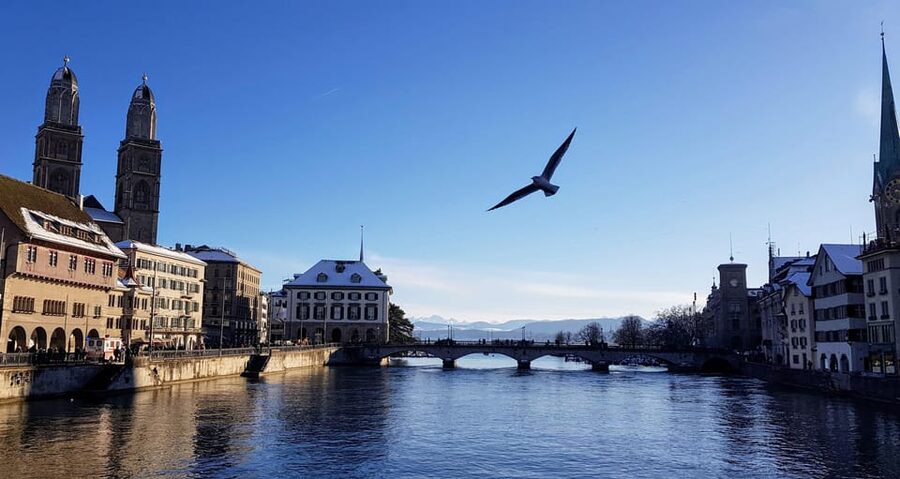
One of the most satisfying stops is Lindenhof. You get a short guided visit, but it comes with two payoffs at once: the historical setting and the outlook over the Limmat and the city. That view is not filler. It helps you understand why this area would have been strategically important long ago, and why later city planners would keep circling back to the same kinds of vantage points.
If you like learning best when you can connect geography to history, this is your kind of moment.
More of the city history, up close


Archäologisches Fenster: the “window” into what was underfoot
Next is the Archäologisches Fenster, where you’ll get a guided look that frames how much of a city’s past can remain quietly under the surface. Even if you’ve seen archaeology before, this stop is useful because it ties the past to the street you’re actually walking.
It’s a reminder that Zurich is not just buildings and shopping. It is also layers—some visible, some waiting.
Roman Heater System: small detail, big meaning
You’ll also see the Roman Heater System. This is the kind of stop that’s easy to overlook on your own, because the feature itself is not a massive monument. But in context, it tells you something important: Roman life here wasn’t only about occupation. It was about comfort, engineering, and everyday infrastructure.
That everyday angle helps when later the tour turns to something bigger and louder like sermons and political arguments.
Rathausbrücke: a bridge stop that keeps you moving
There’s a guided moment at Rathausbrücke too. On a walking tour, bridge stops are often about rhythm—moving you along while giving you a quick historical anchor. Here, it also supports the tour’s theme: the city’s form and the events that happened around it are linked.
The Reformation in real places, not just a lecture
After the ancient layers, the tour shifts gears. This is where it becomes about belief, power, and public debate—the kind of forces that changed Europe beyond Switzerland.
Zwingli’s story is presented through where he preached and debated. You’re not trying to memorize dates. You’re learning how ideas spread through places where people could gather, listen, and argue back.
You’ll walk past key church sites connected to this period and get explanations that make the movement feel less like a distant textbook topic.
Churches on the route: Fraumünster, St. Peter, Wasserkirche, and Grossmünster
Churches are where Zurich’s religious history becomes physical. And this tour is smart about it: it does not treat churches as pretty architecture only.
Church of St. Peter: a stop that sets the religious stage
You’ll have a guided visit at the Church of St. Peter with a short, focused explanation. Since this tour is about the Reformation, the value here is context—how the city’s church life connects to the larger story of change.
If you’re the type who likes understanding how a city’s spiritual life shaped its politics, you’ll appreciate this stop.
Fraumünster: the main indoor moment (and why the Chagall windows matter)
The big church highlight is Fraumünster. Admission is included, and you’ll spend about 20 minutes at the church. Since the tour is led by an accredited Fraumünster guide, you’re not just looking at the space; you’re being guided through its religious and social history.
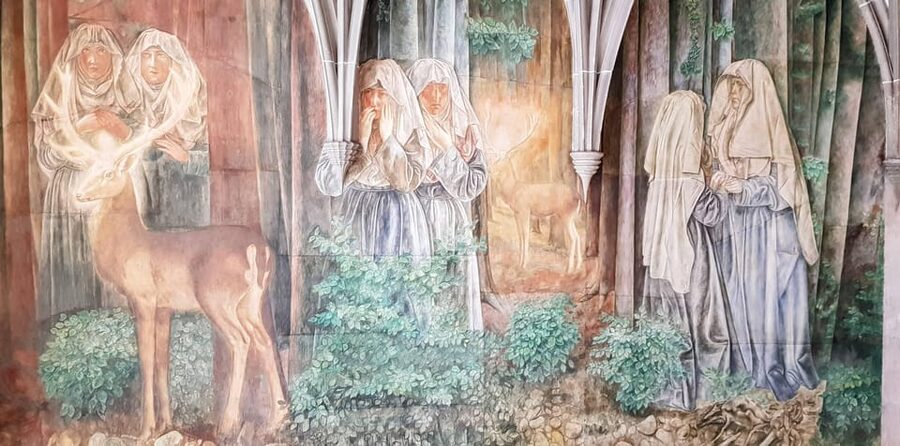
The Chagall window cycle in the choir is a major draw. But the tour’s stronger angle is the one you want: you learn how art fits into the church’s broader layers of meaning. You’re watching beauty, yes, but you’re also picking up what the church represented socially through different eras.
Also, the tour includes a “skip the ticket line” benefit, which helps keep the schedule efficient.
Wasserkirche and Grossmünster: two iconic silhouettes with a purpose
You’ll also visit Wasserkirche and Grossmünster, with guided or visit time around each stop. Both are visually striking, but they’re also used in the tour as historical anchors—points that help you trace where the Reformation story could be read through the city’s sacred landmarks.
Even if you’ve seen photos of these churches, you’ll likely find the tour improves your sense of how Zurich organized religious life and public identity.
Roman power meets reform power: why Lindenhof and the churches work together
One thing this tour does well is keeping its theme consistent. Ancient Zurich explains the city’s strategic logic, then the Reformation explains the city’s ideological logic.
That pairing makes the walk feel coherent:
- Roman presence gives you a sense of permanence and control.
- Zwingli’s reform gives you a sense of disruption and persuasion.
- Churches connect private belief to public consequence.
By the time you reach the later church stops, you’ll start to see Zurich as a place where authorities—whether Roman or religious—relied on holding attention in specific spaces.
Legends, anecdotes, and how stories make the history stick
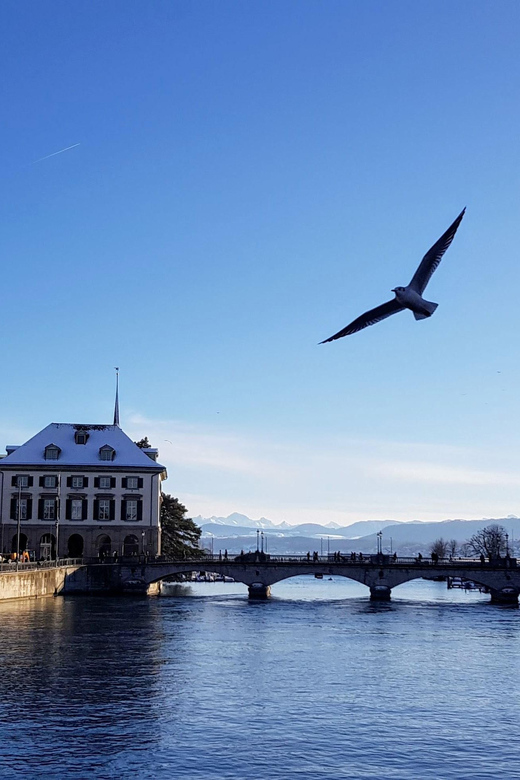
Zurich has a way of collecting legends, and this tour leans into that. You get legends, stories, and anecdotes alongside the major Reformation narrative.
This isn’t just for fun. Anecdotes help you remember. When you later wander the Old Town on your own, the details you learned stop feeling like isolated facts and start turning into a mental map.
And if you like teaching-style clarity, the tour’s approach is designed for you. The guides behind this experience are known for being friendly, attentive, and strong at explaining how the Reformation worked in everyday terms—not only as theology.
Included value: what your money covers (and what it does not)
At $194 per person for 2.5 hours, you’re paying for a guided, story-driven route with specific historical stops and at least one major paid entry.
What’s included
- A guided walk through central Zurich with an emphasis on Reformation history and Zwingli
- Fraumünster admission included
- Guided access to highlights like Lindenhof, Roman-linked sites, and key churches
- A Fraumünster guide (accredited) leading the church portion
- Chagall windows explained in the context of the church’s history
- Skip-the-line benefit for the church visit
- Detailed background information and stories
What’s not included
- Grossmünster tower access
- Access to Old Town churches after 17:00
- Food and drinks
That last point matters if you’re doing this early in the day. You’ll want a snack plan so you don’t feel rushed or distracted while your energy dips.
Pacing and comfort: what to expect from the timing
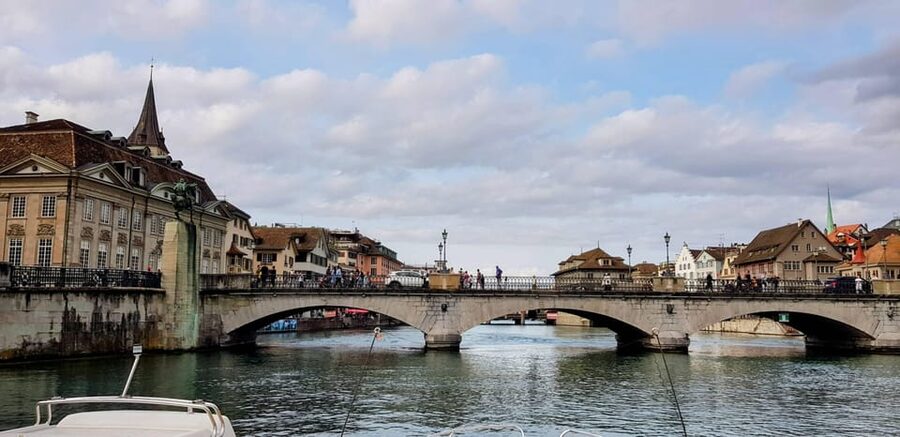
The tour is built with many short guided segments—think quick visits at archaeology points, then longer attention during the church moments. This pacing is useful in Zurich because streets and viewpoints can be compact, but your brain still needs a “reset” between themes.
If you’re coming from elsewhere in the city, you’ll appreciate that the route stays focused on walking and short stops rather than switching between far-apart zones.
Who this tour is best for
This is a strong choice if you:
- Want Old Town history with an argument, not just scenery
- Like tracing modern Switzerland back to earlier turning points
- Enjoy church sites when someone explains how religion connected to social change
- Want a more personal, story-rich format through a private group
It may feel less ideal if you:
- Need wheelchair access (this tour is not suitable for wheelchair users)
- Want a food-focused experience (there’s no food or drinks included)
- Expect everything to be fully inside and long (it’s a walk with multiple short stops)
Should you book Zurich a journey through time, history and the Reformation?
I think you should book it if your goal is to understand Zurich at a deeper level without getting lost in facts. The combination of Zwingli’s Reformation story, the Roman/Celtic origins, and the structured visit to Fraumünster is a solid package for a half-day window.
It’s also a smart pick for first-timers who want more than photos. You’ll leave with a clearer picture of why Zurich became such fertile ground for change, and you’ll have places to remember when you wander afterward.
If you’re mainly after shopping or a chill stroll, you may find this too focused. But if you like history that explains the city’s “why,” this one is worth your time.
FAQ
How long is the tour?
The duration is 2.5 hours.
What’s the meeting point for the tour?
The official meeting point is at the corner of Uraniastrasse 1 / Heiristeg. You can also request to meet at Zurich main station by prior arrangement.
Is the Fraumünster church admission included?
Yes. Admission to the Fraumünster is included, and you also get skip the ticket line.
Which languages are offered for the live guide?
The live guide offers German and English.
Is the Grossmünster tower included?
No. Access to the Grossmünster Tower is not included.
Is food or drinks included?
No. Food and drinks are not included.
Is the tour suitable for wheelchair users?
No. The tour is not suitable for wheelchair users.
If you’d like, tell me your travel dates and whether you prefer a morning or afternoon start, and I’ll suggest a simple Zurich day plan that fits around this 2.5-hour walk.
The City History, Up Close
- Zürich Historic District Tour★ 5.0 · 206 reviews
- City tour historic old town Zurich★ 4.7 · 38 reviews
More Tour Reviews in Zurich
- Lindt Home of Chocolate Museum Entry Ticket★ 4.7 · 9,329 reviews
- Zurich: Day Trip to Grindelwald, Interlaken & Lauterbrunnen★ 4.5 · 4,699 reviews
- Zurich: City Tour, Cruise, and Lindt Home of Chocolate Visit★ 4.5 · 4,624 reviews
- From Zurich: Bus Day Trip to Heidiland and Liechtenstein★ 4.5 · 2,531 reviews
- Zurich: City Highlights Tour by Bus, Cable Car, and Ferry★ 4.4 · 2,366 reviews
More of the Old Town on Foot
- Zurich: City Tour, Cruise, and Lindt Home of Chocolate Visit★ 4.5 · 4,624 reviews
- Zurich: City Highlights Tour by Bus, Cable Car, and Ferry★ 4.4 · 2,366 reviews
- Best of Zurich Tour with Felsenegg Cable Car and Ferry Ride★ 4.0 · 1,229 reviews
- Zurich: City Bus Tour with Audio Guide and Lake Cruise★ 4.3 · 1,195 reviews
- Zurich Sights: Cruise, Lindt Chocolate and optional FIFA Ticket★ 4.0 · 1,028 reviews
Hot Off the Rails: Our Newest Zurich and Alpine Reviews
- Zurich: Private tour to Interlaken, Grindelwald & Jungfrau
★ 5.0 · 3 reviews - Zurich Premium Fitness Pass
★ 3.0 · 3 reviews - Lucerne and the mountains of Central Switzerland (Private Tours)
★ 5.0 · 3 reviews - Alpine Majesty:From Zürich to Jungfraujoch Exclusive Private Tour
★ 5.0 · 3 reviews - Lake Zurich mini boat tour / by night!
★ 5.0 · 3 reviews
Zurich Old Town Walks, compared.
 ★ 4.5City Tour, Cruise, and Lindt Home of Chocolate VisitFrom $1034,624 reviews
 ★ 4.4City Highlights Tour by Bus, Cable Car, and FerryFrom $832,366 reviews
 ★ 4.0Best of Zurich Tour with Felsenegg Cable Car and Ferry RideFrom $861,229 reviews
 ★ 4.3City Bus Tour with Audio Guide and Lake CruiseFrom $571,195 reviews
 ★ 4.0Zurich Sights: Cruise, Lindt Chocolate and optional FIFA TicketFrom $1081,028 reviews
 ★ 4.6Zurich Old Town Walking Tour: 2-HoursFrom $161,008 reviews
 ★ 5.0Zurich Walking Tour With Cruise and Aerial Cable CarFrom $111669 reviews
 ★ 4.0City Sightseeing Tour with Lake CruiseFrom $54632 reviews
Browse the lists this tour appears in