
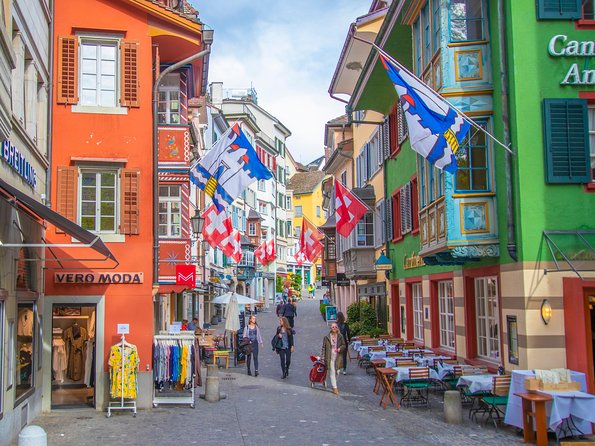
Reviewed · ZURICH OLD TOWN WALKS
Explore Zurich in 60 minutes with a Local
Zurich can be understood fast, if you pick the right route. This 60-minute, small-group stroll is built for quick orientation plus real street-level context, with stops that span politics, art shocks, and postcard architecture. I love the tight timing (it’s efficient without feeling rushed) and the way you get practical local recommendations layered over landmark sights. The main catch: it’s a lot of ground in a short hour, so if you’re craving deep explanations at every corner, you may want to pair it with longer independent sightseeing.
You start at Limmatquai, near Zurich’s historic core, and finish on foot near Predigerkirche so you can keep exploring afterward. With a maximum of 6 travelers, you’re not fighting crowds for attention, and guides can ask what you already saw and what you actually want. Still, because it’s a fixed-style “greatest hits” walk, you’ll need to speak up early if you want the balance to shift toward your specific interests.
In This Review
- Key things to know before you go
- A 60-minute Zurich walk that actually gets your bearings
- Starting at Limmatquai and the Rathaus: power in Renaissance wrapping
- Dadaism stop: the weird origin story that humanizes Zurich
- Grossmünster and the skyline twins: why this church matters
- Münsterbrücke and bridge views: Swiss significance in stone-and-steam
- Fraumünster and the Chagall windows: art you can’t unsee
- St. Peter’s Church and Europe’s largest clock
- Lindenhof: Roman remnants and a Carolingian Kaiserpfalz past
- A Gothic church ending near Predigerkirche: your launchpad for more exploring
- The real value: learning how locals structure a day in Zurich
- Price and logistics: is $86.16 worth it?
- Who this tour suits best (and who should skip it)
- Should you book this Zurich in 60 minutes with a Local?
- FAQ
- How long is the Zurich tour?
- Where does the tour start and where does it end?
- How many people are in the group?
- What ticket do I use?
- What major sights are included?
- Is it refundable if I cancel?
Key things to know before you go
- One hour, small group (up to 6) for quick orientation without the big-tour vibe
- Landmarks with range: Rathaus, Grossmünster, bridges, Fraumünster, and multiple churches
- Art and culture stop tied to the birthplace of Dadaism
- Big-photo moments focused on iconic Zurich skyline angles and symmetrical bridge views
- Food and nightlife guidance that fits how locals actually spend time in the city
- Mobile ticket and a clear start-to-finish route through central Zurich
Keep wandering the lanes of the Old Town
- Zurich: City Tour, Cruise, and Lindt Home of Chocolate Visit★ 4.5 · 4,624 reviews
- Zurich: City Highlights Tour by Bus, Cable Car, and Ferry★ 4.4 · 2,366 reviews
- Best of Zurich Tour with Felsenegg Cable Car and Ferry Ride★ 4.0 · 1,229 reviews
- Zurich: City Bus Tour with Audio Guide and Lake Cruise★ 4.3 · 1,195 reviews
A 60-minute Zurich walk that actually gets your bearings
This is the kind of tour that works when your schedule is tight or your energy is low. One hour sounds short, but that’s the point. Instead of bouncing around aimlessly, you get a planned path through Zurich’s “center of gravity”: government buildings, landmark churches, and the river-and-bridge views that define the city.
I also like how the experience is designed around perspective. You’re not just ticking off famous façades; you’re learning what gives Zurich its daily rhythm and character. The guide is there to translate what you’re seeing into something you can use, like what to prioritize next and where the city’s atmosphere comes from.
The group size matters too. With a maximum of 6 travelers, you’re more likely to get answers to questions on the fly, and the guide can adjust the tempo. Guides can also ask what you already visited, which helps keep the hour from repeating stuff you’ve already seen.
Starting at Limmatquai and the Rathaus: power in Renaissance wrapping
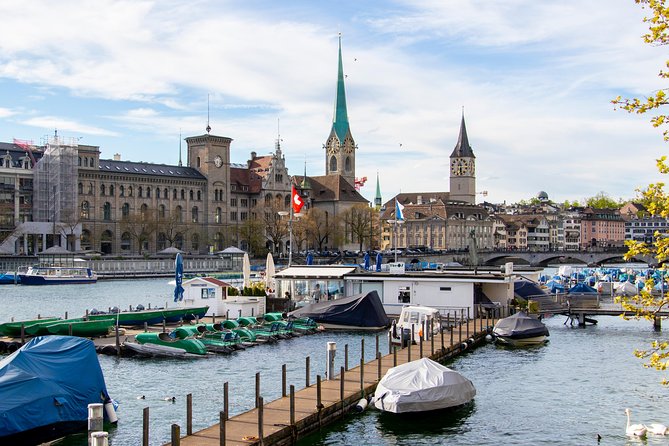
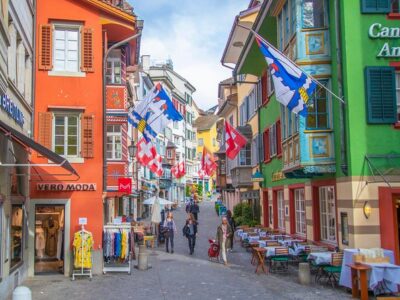
You meet at Limmatquai 55, 8001 Zürich, then walk from there toward the heart of the political old town. One of the first major stops is the historic Rathaus, Zurich’s city hall—an imposing building that shows how civic power chose Renaissance styling. It’s one of those places where a quick exterior look becomes more interesting once you know the role it played in Zurich’s identity.
What I like here is the timing. Starting at the Rathaus area gives you a mental “north star” for the rest of the walk. After you see Zurich’s governing center, the next landmarks make more sense as parts of one continuous urban story rather than separate photo stops.
The drawback is simple: because the tour is fast, you won’t have time for extended reading or long museum-style interpretation. If you want to go deep on civic history, consider doing that later on your own.
Dadaism stop: the weird origin story that humanizes Zurich
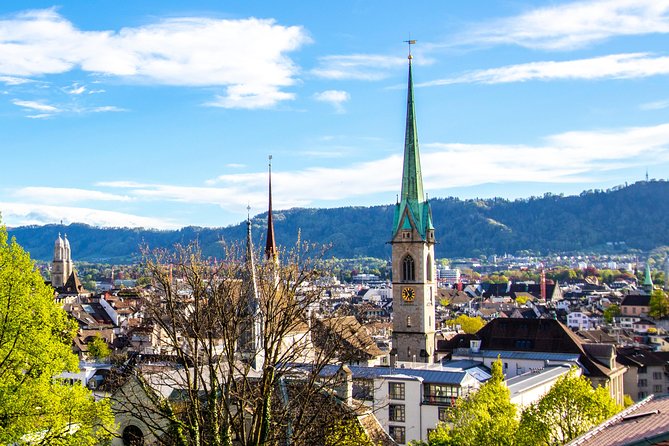
A standout cultural moment comes next: a visit tied to the birthplace of Dadaism and its avant-garde background. Dada isn’t the first thing most people expect in Switzerland, and that’s exactly why this works. It keeps Zurich from feeling like only banks, clocks, and clean streets.
This part is valuable because it reminds you that modern Zurich isn’t just traditional—it has an edge. Even in a city known for order, you’ll find room for disruption and art that rejects conventions. A good guide can connect the dots between that creative attitude and the way people live and think today.
If you enjoy “surprising facts,” this stop is one of the best uses of your hour. If you’re not into art movements at all, you might still appreciate it because it changes the tone of the tour.
Grossmünster and the skyline twins: why this church matters
Then you hit one of Zurich’s most recognizable silhouettes: the Grossmünster, with its twin towers. This church isn’t just a landmark; it’s a visual anchor for the city’s skyline. When you see those towers in context, Zurich starts to feel like a place with an identity you can spot from a distance.
This is where the walk starts delivering the “postcard payoff.” You’re in central Zurich, and you can start thinking about where the best angles are for photos and how the river and bridges shape views. The guide’s job here is to point out what to notice, not just what to photograph.
A consideration: the tour is walking-heavy, so if you’re sensitive to stairs or uneven ground, keep that in mind. Zurich’s old core is pretty walkable, but it’s still historic streets.
A few more Zurich and alpine trips worth a look
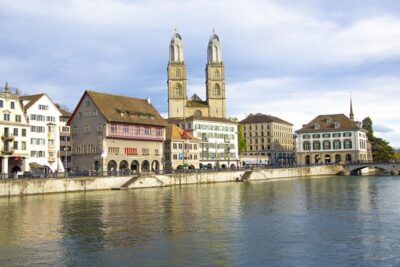
Münsterbrücke and bridge views: Swiss significance in stone-and-steam
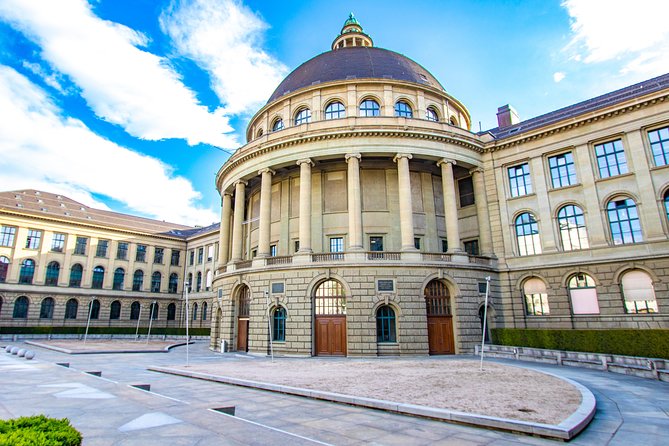
Next comes Münsterbrücke, a bridge with deep Swiss significance and ancient roots. Bridges in Zurich aren’t just crossings; they’re stages. They connect the city’s layers—old town, riverfront life, and the church towers you’ll keep seeing from different angles.
Here’s what makes this stop useful: it’s a natural “pause point.” Even in a one-hour tour, your guide gives you something that helps you later, like how to spot symmetrical views and where to stand for the best river-and-facade composition.
If you came to Zurich for scenery, this is the part that gives you immediate payoff. If it’s raining or gray, bridge lighting can still work—just be ready for slick steps and slower walking.
Fraumünster and the Chagall windows: art you can’t unsee
You then reach Fraumünster, known for the Chagall windows and the building’s layered background. This is one of those moments where the tour stops being only “look” and starts being “understand what you’re looking at.”
Chagall’s style is unmistakable, and being able to connect those windows to the place you’re standing in helps your brain store the image in a meaningful way. It’s also a nice contrast after the bridge and Grossmünster views—same general area, but different emotional tone.
One practical note: since the tour is short, you won’t have time for a slow, detailed art visit. Think of this as a guided orientation to the windows and their significance, then your option to return later if you want more.
St. Peter’s Church and Europe’s largest clock
Next is St. Peter’s Church in Zürich, famous for Europe’s largest church clock. This stop is great for two reasons. First, it gives you a concrete, memorable detail. Second, it reminds you that Zurich’s identity lives in the small things as much as in big towers.
You’ll see the clock as a working visual symbol rather than an abstract tourist object. That matters because Zurich is a city of time—literally, culturally, and architecturally. This is the point where the tour’s “history” label stops being generic and becomes specific.
If you’re a clock-and-mechanics person, don’t rush through this. Even quick observation here feels rewarding.
Lindenhof: Roman remnants and a Carolingian Kaiserpfalz past
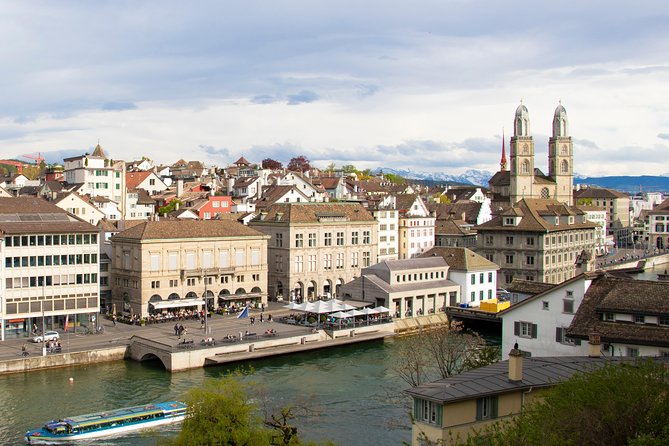
After the churches, the walk shifts to a higher-feeling viewpoint at Lindenhof. This knoll has remnants of a Roman castle and a Carolingian Kaiserpfalz that once stood here. That jump in time is part of what makes Lindenhof such a strong stop: you’re not only seeing one era. You’re seeing how Zurich kept remaking itself.
This is also one of the best places to think about geography. Elevated spots help you understand why the city grew where it did, and why certain towers and bridges keep showing up in your view line.
Drawback? Because Lindenhof is a viewpoint area, you may share it with other pedestrians. With only up to 6 people on the tour, the group shouldn’t feel crowded, but it’s not a private terrace either.
A Gothic church ending near Predigerkirche: your launchpad for more exploring
The walk ends at Predigerkirche, Zähringerpl. 6, 8001 Zürich. Before that finish, the route includes another church stop described as an iconic Gothic church with an intriguing history. Ending at Predigerkirche is smart because it puts you in a lively central spot where you can keep going immediately—without the effort of getting back across town.
This is also where the guide’s “make the most of your visit” part matters. You’ll finish the hour with a clearer sense of what to do next: where to wander for atmosphere, what kinds of cafes or bars might fit your taste, and what areas will feel most worth your time.
The real value: learning how locals structure a day in Zurich
It’s easy to think a tour like this is only for first-timers. I think it’s useful for everyone, including repeat visits, because the focus is practical: where the everyday life energy shows up, how the city’s layers shape what people do, and how to choose your next stop without wasting hours.
A big bonus is customization. The guide checks what you’ve already seen and what you’re aiming for. That matters because Zurich sightseeing can be “either too much or not enough.” If you want, say, more architecture focus, you can steer the hour that way. If you’re more about food and mood, you can ask for that too.
On the guide quality front, the experience has been strong with guides like Sandro and Peter, who were specifically praised for being personable, storytelling-minded, and very informative. If you’re hoping for a warm, human explanation rather than a scripted lecture, this style is a good match.
Price and logistics: is $86.16 worth it?
At $86.16 per person for about one hour with a maximum of 6 travelers, you’re paying for more than sightseeing. You’re paying for an efficient route through central Zurich plus a local’s recommendations that help you use the rest of your trip well.
This is good value when:
- you want a fast orientation and don’t want to plan a route yourself,
- you like getting food and nightlife tips that fit what you like,
- you prefer small groups over crowd routes,
- your time in Zurich is short and you still want context.
It’s less of a bargain if:
- you’re the kind of traveler who wants long, slow explanations at every stop,
- you already know the city well and only need a couple of “must see” photos,
- you expect the tour to act like a museum guide with deep background at each site.
As a rule, think of this as a high-impact primer. Pair it with independent time later for the deeper dives.
Who this tour suits best (and who should skip it)
This experience is ideal for:
- first-time visitors who want to get their bearings fast,
- travelers who love church architecture and landmark city views,
- people who want both culture and practical suggestions in a tight timeframe,
- anyone who prefers a small group where conversation is possible.
Skip it or modify your expectations if:
- you want a slow pace with lots of sitting and detailed history at each building,
- you’re mainly after one or two places and the rest feels unnecessary,
- you expect the hour to feel like a deep educational class rather than a curated walk.
And here’s one simple tip before you meet the guide: tell them what you already saw, what you skipped, and what you’re most curious about. That’s the difference between an hour that feels perfectly tuned and one that just covers a list.
Should you book this Zurich in 60 minutes with a Local?
I’d book it if you want Zurich to make sense quickly, not just look impressive. The strongest reason is the combination of major landmarks (Rathaus, Grossmünster, Fraumünster, St. Peter’s clock, Lindenhof) with a local’s day-to-day recommendations that help you plan your next moves.
If you’re short on time, this tour is a smart way to spend it. If you’re staying longer, use it as your orientation day, then come back on your own for whatever caught your attention most.
If your priority is ultra-deep context at every stop, plan a longer follow-up activity instead. But for most visitors, this is a well-structured hour that helps Zurich feel personal and doable.
FAQ
How long is the Zurich tour?
The tour lasts about 1 hour.
Where does the tour start and where does it end?
It starts at Limmatquai 55, 8001 Zürich, Switzerland and ends at Predigerkirche, Zähringerpl. 6, 8001 Zürich, Switzerland.
How many people are in the group?
The tour has a maximum of 6 travelers.
What ticket do I use?
You receive a mobile ticket.
What major sights are included?
The walk includes stops such as the Rathaus, a birthplace site tied to Dadaism, Grossmünster, Münsterbrücke, Fraumünster, St. Peter’s Church (with Europe’s largest church clock), Lindenhof, and an additional Gothic church stop.
Is it refundable if I cancel?
No. The experience is non-refundable and cannot be changed for any reason.
More 1-Hour Experiences in Zurich
- Private Tour of Zurich in 60 minutes with a Local★ 4.5 · 14 reviews
- Zurich: Express Walk with a Local in 60 minutes★ 4.5 · 6 reviews
- 1 Hour Express Walk of St. Gallen with a Local★ 5.0 · 4 reviews
More Tour Reviews in Zurich
- Lindt Home of Chocolate Museum Entry Ticket★ 4.7 · 9,329 reviews
- Zurich: Day Trip to Grindelwald, Interlaken & Lauterbrunnen★ 4.5 · 4,699 reviews
- Zurich: City Tour, Cruise, and Lindt Home of Chocolate Visit★ 4.5 · 4,624 reviews
- From Zurich: Bus Day Trip to Heidiland and Liechtenstein★ 4.5 · 2,531 reviews
- Zurich: City Highlights Tour by Bus, Cable Car, and Ferry★ 4.4 · 2,366 reviews
More of the Old Town on Foot
- Zurich: City Tour, Cruise, and Lindt Home of Chocolate Visit★ 4.5 · 4,624 reviews
- Zurich: City Highlights Tour by Bus, Cable Car, and Ferry★ 4.4 · 2,366 reviews
- Best of Zurich Tour with Felsenegg Cable Car and Ferry Ride★ 4.0 · 1,229 reviews
- Zurich: City Bus Tour with Audio Guide and Lake Cruise★ 4.3 · 1,195 reviews
- Zurich Sights: Cruise, Lindt Chocolate and optional FIFA Ticket★ 4.0 · 1,028 reviews
Hot Off the Rails: Our Newest Zurich and Alpine Reviews
- Zurich: Private tour to Interlaken, Grindelwald & Jungfrau
★ 5.0 · 3 reviews - Zurich Premium Fitness Pass
★ 3.0 · 3 reviews - Lucerne and the mountains of Central Switzerland (Private Tours)
★ 5.0 · 3 reviews - Alpine Majesty:From Zürich to Jungfraujoch Exclusive Private Tour
★ 5.0 · 3 reviews - Lake Zurich mini boat tour / by night!
★ 5.0 · 3 reviews
Zurich Old Town Walks, compared.
 ★ 4.5City Tour, Cruise, and Lindt Home of Chocolate VisitFrom $1034,624 reviews
 ★ 4.4City Highlights Tour by Bus, Cable Car, and FerryFrom $832,366 reviews
 ★ 4.0Best of Zurich Tour with Felsenegg Cable Car and Ferry RideFrom $861,229 reviews
 ★ 4.3City Bus Tour with Audio Guide and Lake CruiseFrom $571,195 reviews
 ★ 4.0Zurich Sights: Cruise, Lindt Chocolate and optional FIFA TicketFrom $1081,028 reviews
 ★ 4.6Zurich Old Town Walking Tour: 2-HoursFrom $161,008 reviews
 ★ 5.0Zurich Walking Tour With Cruise and Aerial Cable CarFrom $111669 reviews
 ★ 4.0City Sightseeing Tour with Lake CruiseFrom $54632 reviews
Browse the lists this tour appears in