
Reviewed · ZURICH SELF-GUIDED TRAILS & GAMES
Zurich in the Mirror of the Past: Self-Guided Audio Tour
Zurich in the Mirror of the Past turns the city into a moving lesson, with a route you follow at your speed. I like that the audio is high-quality and recorded by a professional speaker in English, so the stories land clearly while you walk past real landmarks. I also like that the guide pairs explanations with photos and detailed directions, which makes it easier to stay on track without guessing.
The main consideration is that it’s fully self-guided: you’ll need your phone, internet, and headphones, and there’s no live guide to rescue you if you get off-route. Also, it isn’t set up for wheelchair users, so plan for stairs and city sidewalks.
In This Review
- Key things you’ll notice on this Zurich audio tour
- How this self-guided audio tour actually works
- Starting at Bahnhofplatz: where to begin without stress
- Paradeplatz and Bahnhofstrasse: the city’s public face and private ambition
- Grossmünster and Fraumünster: the skyline anchors with political backstories
- St. Peter’s Church and the Water Church: faith, function, and everyday life
- Rathaus and the Opera House: where civic Zurich shows its posture
- Lindenhof and the Roman Baths: a view that explains why people stayed
- Cabaret Voltaire and Lenin’s House: ideas that shook the streets
- Monuments you can read: Alfred Escher, Pestalozzi, Zwingli, Waldmann
- Guild houses and trading Zurich: Millers, Bakers, Salt and Spice, and more
- Ganymed and the Pavilion: sculpture breaks in your route
- Water Church and Urania Observatory: Zurich’s relationship with water and light
- Price and value: is $13 fair for 2 to 2.5 hours?
- Who should book this audio tour (and who should skip)
- Tips to get the most from the route
- Should you book Zurich in the Mirror of the Past?
- FAQ
- Where does the self-guided tour start?
- How long does the audio tour take?
- Is there a live guide?
- What language is the audio guide in?
- What do I need to do the tour?
- Is the tour suitable for wheelchair users?
- How long is the tour available after purchase?
- Can I get a refund if my plans change?
Key things you’ll notice on this Zurich audio tour

- Professional English narration that makes the history feel understandable, not academic
- Photo-based directions that help you follow along through the center on foot
- A route built around big names like Grossmünster, Fraumünster, St. Peter’s Church, and the Water Church
- Time for both famous sights and character stops, like Cabaret Voltaire and Lenin’s House
- Monuments with context, including Alfred Escher, Johann Heinrich Pestalozzi, Ulrich Zwingli, and Hans Waldmann
- Art and symbols in the middle of the walk, including Ganymed and the Pavilion sculpture
Set your own pace on another self-guided trail
- Zurich: City Bus Tour with Audio Guide and Lake Cruise★ 4.3 · 1,195 reviews
- Zurich City Tour with Audio Commentary★ 4.0 · 372 reviews
- Zurich: City Top Attractions Tour by Bus with Audio Guide★ 4.3 · 282 reviews
- The Dark Side of Zurich: Self-Guided Audio City Tour★ 4.4 · 52 reviews
How this self-guided audio tour actually works
This isn’t a bus tour or a scripted group walk. It’s a self-guided route you start from Bahnhofplatz and follow using the link you get after booking.
You’re guided by a high-quality audio track in English, with clear directions and photos to keep you moving between stops. The duration is typically 2 to 2.5 hours, so you’re looking at a comfortable walking pace rather than a sprint.
You’ll want a charged smartphone, headphones, and working internet access. Without those, you’ll lose the audio and the photo/direction support that makes the tour smooth.
Starting at Bahnhofplatz: where to begin without stress
Your launch point is Bahnhofplatz in Zurich, right by the main train station area. That’s helpful because you can plug in, orient yourself fast, and then go straight into the story.
Since there’s no live guide, I’d treat Bahnhofplatz like your staging area: get your headphones on, open the tour link, and start walking while the audio sets the tone. This is one of those tours where being ready at the first minute saves you from the common self-guided problem: wandering while you try to reconnect.
One thing to watch for: if you were hoping to find staff at an information desk, don’t count on it. Zurich’s station area can have closures on public holidays, so rely on the digital route and the link you receive after booking.
Paradeplatz and Bahnhofstrasse: the city’s public face and private ambition
You’ll pass through the heart of Zurich where the city looks like it does in postcards, especially around Paradeplatz and Bahnhofstrasse. This is where it helps to have narration, because the audio connects everyday streets to the people who shaped the city’s power.
As you walk, listen for how Zurich’s history isn’t only about churches and famous names. It’s also about decisions, money, civic control, and the push-pull between order and disruption.
Practical tip: stay alert near busy crossings. This is a central-shopping zone, so even on a “history walk,” you’ll still be sharing sidewalks with commuters.
Grossmünster and Fraumünster: the skyline anchors with political backstories

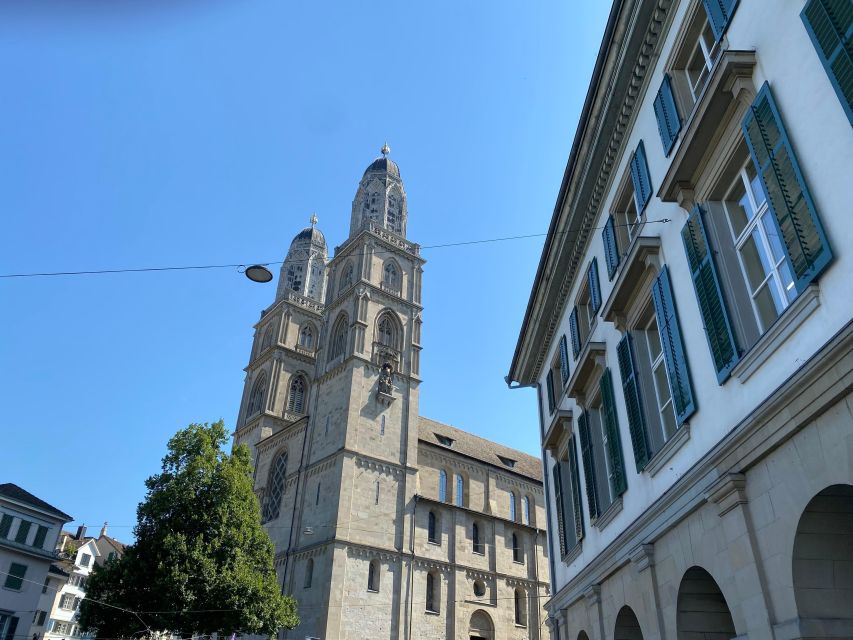
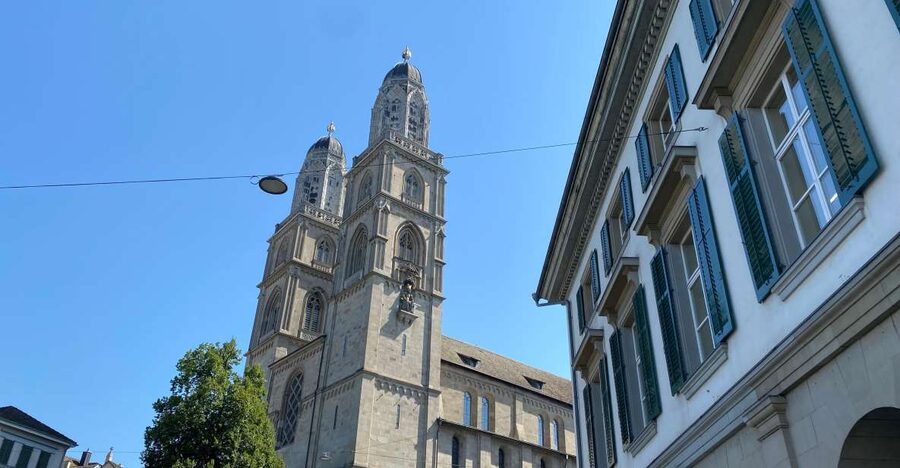
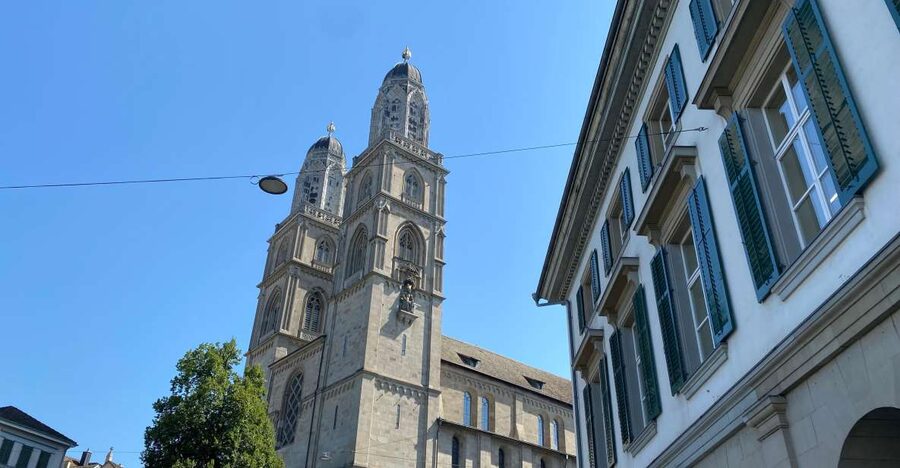
Zurich’s most iconic church silhouettes show up early and often, especially Grossmünster and Fraumünster. These aren’t just pretty buildings to photograph. The audio framing turns them into landmarks with influence—places where belief, authority, and local identity connect.
You’ll also get narration around why these sites mattered to former residents and how the city’s power structures evolved. That context makes your photos more than visuals; you start noticing features that match the story you’re hearing.
If you’re a skyline watcher, this is a strong segment. If you only want museums and no “place-based interpretation,” you may find the churches take more audio time than you expected—but that’s also why the tour feels cohesive.
More trips with a local guide along

St. Peter’s Church and the Water Church: faith, function, and everyday life
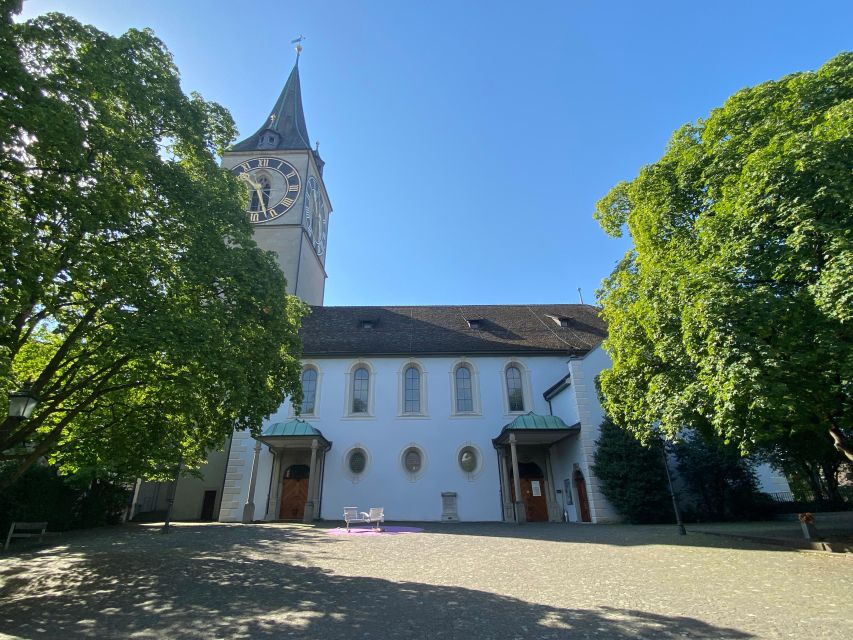
The route also highlights St. Peter’s Church and the Water Church. These stops are a good reminder that the city’s spiritual spaces weren’t isolated from daily life—they were woven into civic rhythm.
The audio leans into individual stories, including people who did good and people involved in darker outcomes. That can be a lot for one walk, but it’s also what makes the city feel like more than a photo set.
You might not catch every architectural detail from street level. Still, the guide helps you see what to pay attention to, so you’re not just staring at stone and hoping it makes sense.
Rathaus and the Opera House: where civic Zurich shows its posture
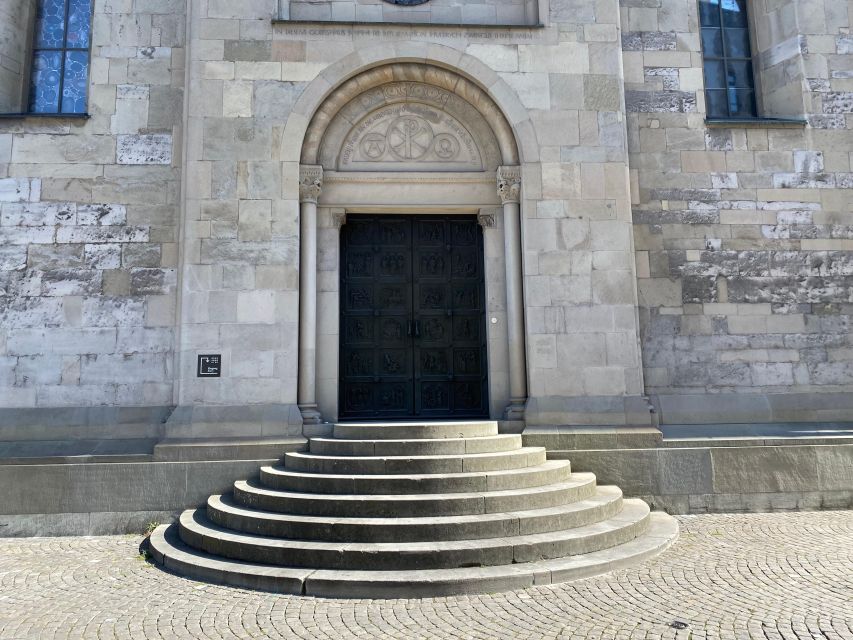
You’ll reach civic landmarks including City Hall (Rathaus) and the Opera House. This is the part of the walk where Zurich starts to feel formal—less intimate, more official.
With the audio playing, these locations become waypoints in the story of governance and public life. You’ll hear threads about bold decisions, intrigue, and the kind of leadership that affected ordinary people.
If you like “how a city works,” this segment is worth your full attention. If you prefer quiet streets over grand facades, take a slower pace here and pause long enough to let the narration finish its key point.
Lindenhof and the Roman Baths: a view that explains why people stayed
Lindenhof is one of those Zurich places where the scene itself supports the story: elevated views, historic layers, and a sense that this spot mattered long before today’s streets formed. The audio tour uses Lindenhof as a pivot point, linking past residents to what the city needed from this location.
You’ll also encounter the Roman Baths, which adds a real “this goes way back” moment to the walk. It’s not just background trivia; the tour’s framing helps you connect the Roman presence to the later evolution of Zurich into the city you recognize now.
This is a good place to check your bearings. Take a moment to look around, then match what you see to what the audio describes.
Cabaret Voltaire and Lenin’s House: ideas that shook the streets
Zurich isn’t only a city of churches and merchants. The tour brings you to Cabaret Voltaire, and it also includes Lenin’s House.
These stops shift the tone toward ideas, controversy, and political transformation. The audio’s promise of sensitive topics shows up here in a manageable way: you’re walking through history, but you’re still moving forward at an easy pace.
If modern history is your thing, this section can become a highlight. If you’re looking for a purely traditional old-town walk, you may need to mentally switch gears from stone churches to radical thought.
Monuments you can read: Alfred Escher, Pestalozzi, Zwingli, Waldmann

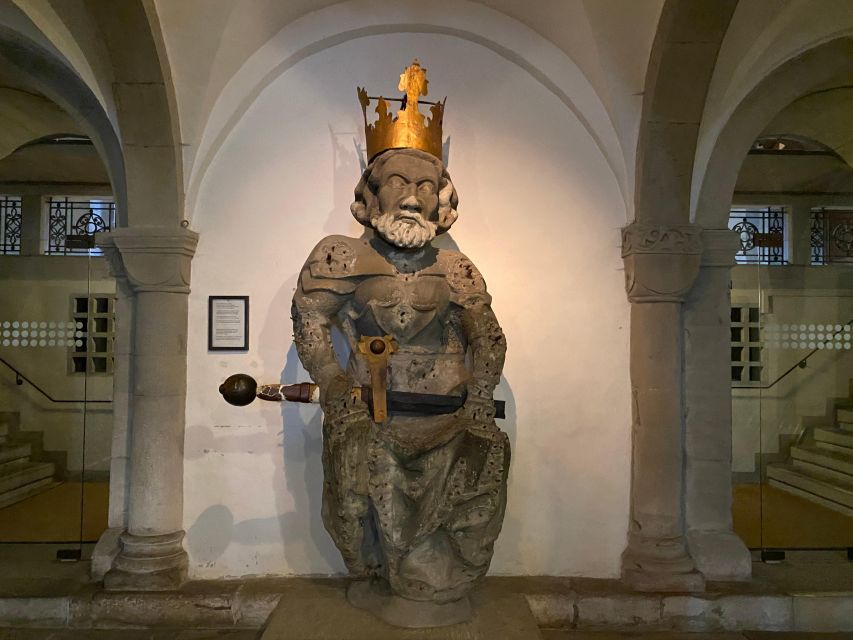
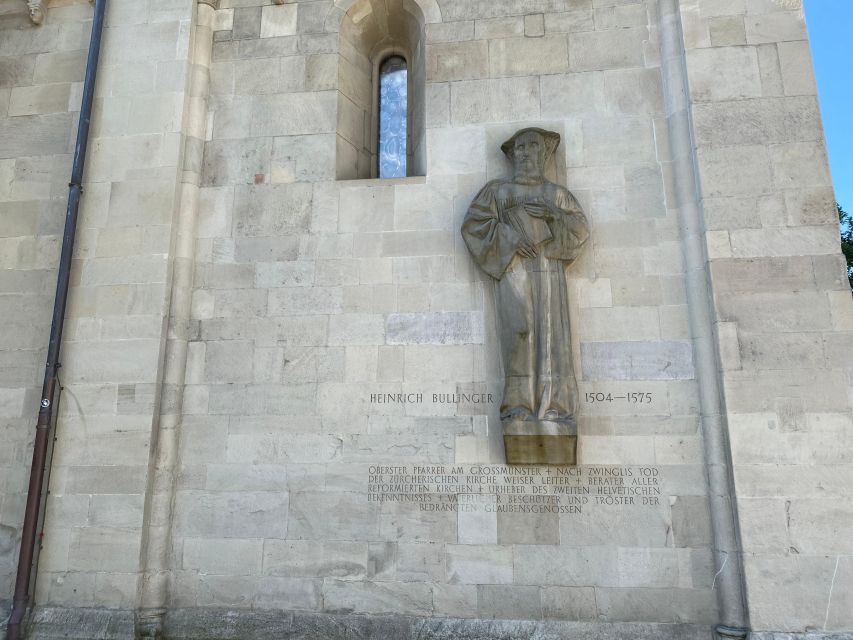
The tour includes monuments honoring Alfred Escher, Johann Heinrich Pestalozzi, Ulrich Zwingli, and Hans Waldmann. The value here is simple: sculptures become shorthand for deeper stories when the audio supplies context.
Instead of walking past names carved into public space, you get the human side—how these figures influenced Zurich, for better and worse. Since the tour specifically mentions both humanity and courage alongside tragedies and executions, the narration seems designed to make you think, not just admire.
One caution: monuments can blur together if you move too fast. Keep your eyes open, but let the audio finish the key story before you step onward.
Guild houses and trading Zurich: Millers, Bakers, Salt and Spice, and more
A major part of the tour is dedicated to the city’s trading and guild identity, including the Guilds of Millers, Bakers, Salt and Spice Merchants, and the Masonic Lodge. This is where Zurich stops being a set of landmarks and starts becoming a system.
Why this matters: guilds weren’t just historical groups. They helped shape who had power, how work was valued, and how the city protected its interests. Seeing these buildings on foot makes the story feel more grounded than reading it on a screen.
This segment is also great for travelers who love details like street-level architecture and the sense that commerce left a physical mark on the city.
Ganymed and the Pavilion: sculpture breaks in your route
Not every highlight has to be a building. The audio tour includes Ganymed and the Pavilion sculpture(s), giving you moments to slow down and look at art in context.
These stops work like mental reset buttons in a two-hour walk. You get a break from “name, date, landmark,” and the city becomes more personal again.
If you enjoy street art and public sculptures, you’ll probably enjoy these more than you expect. If you only want major monuments, treat these as small bonuses—still worth stopping briefly for the narration.
Water Church and Urania Observatory: Zurich’s relationship with water and light
Two more key anchors show up on the route: the Water Church and the Urania Observatory. Together they point to Zurich’s practical relationship with its environment—especially water—and its interest in observing and understanding the world.
The Water Church reinforces the idea that faith and civic life were intertwined in everyday settings. Urania adds a more scientific, observational tone, and it’s a nice tonal contrast after political and civic stops.
If you like variety in a walking tour, this pairing helps. It breaks the route into different themes rather than repeating the same “historic facade” feeling.
Price and value: is $13 fair for 2 to 2.5 hours?
At $13 per person for an English audio guide, this is priced like a value add, not a premium guided experience. For that money, you’re paying for three things: narration by a professional speaker, a route that covers major sights, and navigation support with photos and directions.
What you’re not paying for is a live guide’s flexibility. That means you need to do your part: charged phone, headphones, and enough attention to follow the instructions.
If you have a strong interest in Zurich’s top sights plus the kind of human stories that include both heroic and dark moments, the cost feels reasonable. If you’re the type who hates self-guided tech, you might feel the price only covers “access,” not certainty.
Who should book this audio tour (and who should skip)
This experience is a good fit if you want:
- A 2–2.5 hour walking plan that hits major highlights without rushing
- An audio guide that explains the route with photos and directions
- A mix of famous landmarks and deeper stories about former residents
It may be less ideal if:
- You rely on a live guide for navigation help
- You don’t want to depend on internet on your phone
- You need wheelchair-friendly routing (it’s not suitable for wheelchair users)
Tips to get the most from the route
Bring the essentials exactly as suggested: headphones and a charged smartphone, plus internet access. If your battery is low, this kind of tour turns into stress fast, because you won’t just lose the audio—you’ll lose the photo/direction guidance too.
Use a walking pace that lets you finish each story beat. If you sprint ahead, you’ll end up arriving at stops without the narration that makes them meaningful.
At the churches and major civic buildings, take 60 seconds to stop. The route is built to work while you’re moving, but your best photos and best understanding usually come when you pause long enough for the audio point to land.
Should you book Zurich in the Mirror of the Past?
I’d book it if you want a compact, self-paced Zurich experience that goes beyond surface sightseeing. The combination of major sights (from Grossmünster to the Roman Baths) plus character-driven narration makes it a good choice for travelers who like their history with real human stakes.
I’d skip or think twice if you strongly prefer guided tours, if your phone battery is usually unreliable, or if you need wheelchair-friendly routes. Since there’s no live guide, the tour’s quality depends on your ability to follow the link and keep the audio playing smoothly.
If you’re comfortable with that, this is an easy way to turn a walk through Zurich into something sharper and more personal. And at $13 for an English, professionally recorded guide, it’s a pretty solid deal—so long as you come prepared.
FAQ
Where does the self-guided tour start?
The tour begins at Bahnhofplatz in Zurich.
How long does the audio tour take?
Plan for about 2 to 2.5 hours.
Is there a live guide?
No. It’s fully self-guided using a link you receive after booking.
What language is the audio guide in?
The audio guide is available in English.
What do I need to do the tour?
You’ll need a smartphone with internet, plus headphones.
Is the tour suitable for wheelchair users?
No, it is not suitable for wheelchair users.
How long is the tour available after purchase?
The tour is valid for 365 days.
Can I get a refund if my plans change?
Yes. You can cancel up to 24 hours in advance for a full refund.
More Tours in Zurich
- Zurich: City Tour, Cruise, and Lindt Home of Chocolate Visit★ 4.5 · 4,624 reviews
- Zurich: City Highlights Tour by Bus, Cable Car, and Ferry★ 4.4 · 2,366 reviews
- Heidiland and Liechtenstein Tour from Zurich★ 4.0 · 1,745 reviews
- Best of Zurich Tour with Felsenegg Cable Car and Ferry Ride★ 4.0 · 1,229 reviews
- Zurich: City Bus Tour with Audio Guide and Lake Cruise★ 4.3 · 1,195 reviews
More Tour Reviews in Zurich
- Lindt Home of Chocolate Museum Entry Ticket★ 4.7 · 9,329 reviews
- Zurich: Day Trip to Grindelwald, Interlaken & Lauterbrunnen★ 4.5 · 4,699 reviews
- Zurich: City Tour, Cruise, and Lindt Home of Chocolate Visit★ 4.5 · 4,624 reviews
- From Zurich: Bus Day Trip to Heidiland and Liechtenstein★ 4.5 · 2,531 reviews
- Zurich: City Highlights Tour by Bus, Cable Car, and Ferry★ 4.4 · 2,366 reviews
More Trails You Set Yourself
- Zurich: City Bus Tour with Audio Guide and Lake Cruise★ 4.3 · 1,195 reviews
- Zurich City Tour with Audio Commentary★ 4.0 · 372 reviews
- Zurich: City Top Attractions Tour by Bus with Audio Guide★ 4.3 · 282 reviews
- The Dark Side of Zurich: Self-Guided Audio City Tour★ 4.4 · 52 reviews
- Zurich: Audio Guided City Tour and Train to “Top of Zurich”★ 4.2 · 41 reviews
Hot Off the Rails: Our Newest Zurich and Alpine Reviews
- Zurich: Private tour to Interlaken, Grindelwald & Jungfrau
★ 5.0 · 3 reviews - Zurich Premium Fitness Pass
★ 3.0 · 3 reviews - Lucerne and the mountains of Central Switzerland (Private Tours)
★ 5.0 · 3 reviews - Alpine Majesty:From Zürich to Jungfraujoch Exclusive Private Tour
★ 5.0 · 3 reviews - Lake Zurich mini boat tour / by night!
★ 5.0 · 3 reviews
Zurich Self-Guided Trails & Games, compared.
 ★ 4.3City Bus Tour with Audio Guide and Lake CruiseFrom $571,195 reviews
 ★ 4.0Zurich City Tour with Audio CommentaryFrom $44372 reviews
 ★ 4.3City Top Attractions Tour by Bus with Audio GuideFrom $44282 reviews
 ★ 4.5Mt. Rigi Self-Guided Tour: Lake Lucerne Cruise and Mountain SpaFrom $21183 reviews
 ★ 4.4The Dark Side of Zurich: Self-Guided Audio City TourFrom $1352 reviews
 ★ 4.2Audio Guided City Tour and Train to “Top of Zurich”From $5141 reviews
 ★ 4.0Einstein in Zurich: Walk in Time Exploration Game and TourFrom $725 reviews
 ★ 4.6Revealing Lucerne: Self-Guided Reading City TourFrom $622 reviews
Browse the lists this tour appears in